Ever wonder what it’s really like to live on the water in Sausalito? For many buyers, floating homes feel equal parts dream, design statement, and practical question mark. If you are curious about the day-to-day experience, ownership structure, and who this lifestyle tends to suit, this guide will help you see the docks more clearly. Let’s dive in.
Where Sausalito’s floating homes are
Sausalito’s floating-home community is a distinct waterfront enclave in Marin County, largely just north of the Sausalito city limit. Access is primarily off Bridgeway at Gate 5 and Gate 6, where fixed piers connect the homes to land.
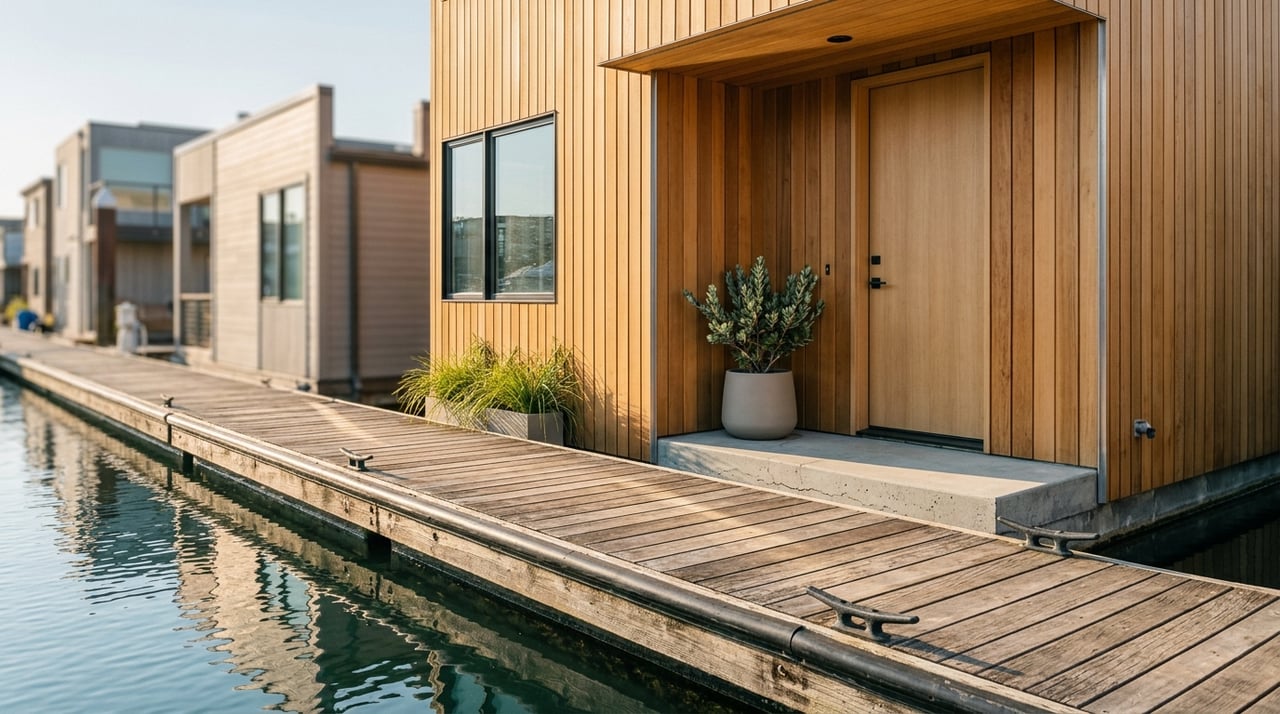
City planning materials describe the area as an organized neighborhood of narrow docks, colorful homes, container gardens, and shared gathering spaces. The area also connects to the Mill Valley-Sausalito bike path and the Bay Trail, which adds to its everyday appeal and accessibility.
This is not a broad housing category spread across town. The Floating Homes Association represents residents of more than 400 homes in five floating-home marinas, so the market is small, specialized, and tightly defined.
What makes a floating home different
A floating home is not the same thing as a boat. Marin County assesses floating homes as homes rather than vessels, and defines them as full-time dwellings on the water with no motor, shore-connected utilities, and a permanent sewage hookup.
That distinction matters if you are trying to understand how these properties fit into the local market. In practical terms, you are looking at a true residential property type with its own ownership, maintenance, and regulatory framework.
For buyers, this means the purchase process often starts with a mindset shift. You are not simply buying a waterfront novelty. You are considering a very specific form of homeownership within a niche Marin housing community.
Daily life on the docks
The biggest lifestyle difference is simple: the tide is part of your routine. According to the Floating Homes Association, San Francisco Bay can rise and fall by about 2 to 8 feet twice a day, and many homes sit on concrete barges that float higher at high tide and settle lower at low tide.
That rhythm shapes how the neighborhood feels from morning to evening. The waterline changes, the docks shift visually, and your arrival home can feel a little different depending on the time of day.
There are also practical tradeoffs. Dock living may mean carrying groceries farther than you would from a typical driveway, and walking exposed paths in wind or rain.
For many residents, those tradeoffs are part of the appeal rather than a drawback. Local coverage and city materials consistently describe the area as close-knit, creative, and rooted in a strong waterfront culture.
Community feel and dock culture
One reason floating homes capture so much attention is that the neighborhood feels social in a way many traditional streets do not. Homes sit close together along narrow docks, and the shared access points naturally create more day-to-day interaction.
City planning materials frame the broader area as a working waterfront that welcomes houseboats and liveaboards while protecting public access, water-dependent uses, and a long-standing community of artists and innovators. That context helps explain why the floating-home district feels so distinctive within Marin.
There is also a strong visual identity here. The homes, gardens, decks, and dockside details create a setting that feels highly personal and deeply tied to the bay.
The interest extends beyond residents themselves. The Floating Homes Association even offers private guided tours for small groups, which speaks to the area’s lasting design appeal and public curiosity.
Home styles and design range
If you picture every floating home as a tiny rustic cabin, Sausalito quickly changes that assumption. Local examples range from compact homes around 300 square feet to much larger residences around 1,700 or 2,894 square feet, with some restored ferry or ship homes reaching about 7,800 square feet.
That range creates real variety on the docks. Some homes feel intimate and simple, while others are architecturally bold and surprisingly expansive.
Common layouts include one- or two-story plans, double-height living areas, loft-like work or sleeping spaces, and strong indoor-outdoor connections. Decks, terraces, roof spaces, and large view windows show up often in published examples.
The architectural tone is equally varied. You may see converted barges, former boats, contemporary new builds, A-frame forms, shingled cottage looks, and art-driven exteriors all within the same general setting.
Interiors often reflect the bay
Inside, many floating homes lean into light, openness, and water views. Published local examples mention pale interiors, hardwood floors, exposed beams, skylights, and walls of glass.
Those details make sense for the setting. When you live this close to the water, design choices often aim to bring in daylight, frame the bay, and make even a smaller footprint feel open.
This is one reason the floating-home market appeals to design-minded buyers. The homes tend to reward creativity, and the setting gives architecture a more immediate relationship to landscape than many conventional properties can offer.
How ownership usually works
One of the most important things to understand is that ownership is typically split. In the standard structure, you own the floating home itself, while the marina owner or landlord owns the berth, docks, utility lines, parking areas, and common-area maintenance responsibilities.
That setup is very different from buying a typical single-family home on fee-simple land. It means you need to evaluate both the property and the berth arrangement with equal care.
Marin County also notes that floating homes are tied to shore utilities and taxed as homes rather than vessels. For buyers comparing this option to a conventional waterfront property, that local classification is a key part of the picture.
What berth fees may cover
Berth fees are part of the ownership equation, so they should never be treated as a side detail. According to the Floating Homes Association, these fees can cover water, garbage, sewage, parking, and common-area maintenance, in addition to rent.
Because the floating-home market is so specialized, understanding the full monthly cost structure is essential. The right comparison is not just purchase price versus purchase price, but total carrying cost versus lifestyle value.
A careful buyer will want clear documentation and a full review of what is included. In a niche market like this, details matter.
Marin County rules matter
Floating homes in Marin County operate within a very local framework, and that is especially important when you look at berth transfers and rent rules. AB 754, approved on October 10, 2025, amends the Floating Home Residency Law for Marin County through January 1, 2038.
According to the legislative summary in the research, the law caps annual berth-rent increases, sets special rules for in-place transfers, and limits certain fees to actual costs. The measure was developed after extended collaboration among the Floating Homes Association, marina owners, and county officials.
For buyers and sellers, this reinforces a simple point. Floating-home transactions are not generic, and local rules can directly affect long-term costs and transfer logistics.
Renovations may need review
Another common assumption is that owners can modify these homes freely because they sit on the water. In reality, that is not always the case.
Marin County planning materials show that floating-home exception review can be required when a project exceeds certain height, length, or floor-area standards. Rooftop decks and exterior staircases are examples that may trigger review.
If you are a buyer with a strong design vision, this is where local guidance becomes especially valuable. The home may offer exciting upside, but the path to improvements needs to be understood early.
Infrastructure and long-term resilience
One of the more interesting aspects of floating homes is that the homes themselves float, but the systems supporting them do not. City planning materials and Sausalito’s shoreline adaptation work emphasize that the biggest vulnerabilities are often the fixed elements such as access roads, parking, utilities, and dock infrastructure.
The city’s Shoreline Adaptation Plan focuses on flooding, utility and transportation corridors, Bay access, and shoreline recreation. That broader planning context matters because it shapes how the community functions over time.
For buyers, this is less about alarm and more about informed ownership. The lifestyle is beautiful, but it exists within a shoreline environment that requires practical attention to infrastructure and access.
Who this lifestyle tends to suit
Floating homes are not for everyone, and that is exactly why they are so compelling to the right buyer. Based on the ownership structure, design character, and day-to-day realities described above, this niche tends to fit people who value individuality, bay views, and strong neighborhood connection.
It can also suit buyers who are comfortable with compact or unconventional living patterns, and who do not mind more active maintenance and lease logistics than a typical land-based house. If you enjoy architecture, waterfront atmosphere, and a home with a strong sense of place, the appeal is easy to understand.
From a real estate perspective, this is where local insight becomes especially important. In a small market with distinctive rules and highly varied homes, good guidance can help you separate novelty from true fit.
If you are considering a floating home in Sausalito, it helps to work with an advisor who understands both the lifestyle and the details behind the purchase. Daniel M. Nebenzahl brings deep Marin knowledge, a design-minded perspective, and thoughtful buyer and seller guidance tailored to unique properties.
FAQs
What is a floating home in Marin County?
- A floating home in Marin County is a full-time dwelling on the water with no motor, shore-connected utilities, and a permanent sewage hookup, and the county assesses it as a home rather than a vessel.
Where are Sausalito’s floating homes located?
- Sausalito’s floating-home area is largely just north of the Sausalito city limit in Marin County, with primary access off Bridgeway at Gate 5 and Gate 6.
What is daily life like in Sausalito floating homes?
- Daily life is shaped by tides, exposed dock walkways, and a close-knit neighborhood setting, with many residents drawn to the creative waterfront culture and strong sense of community.
What do berth fees for Sausalito floating homes cover?
- According to the Floating Homes Association, berth fees can cover water, garbage, sewage, parking, common-area maintenance, and rent.
Can you remodel a floating home in Marin County?
- Some projects may require Marin County review, especially if plans exceed height, length, or floor-area standards or include features like rooftop decks or exterior staircases.
Are Sausalito floating homes a good fit for every buyer?
- No, they are generally best suited to buyers who value design individuality, bay views, and dock-community living, and who are comfortable with more specialized ownership and maintenance considerations.