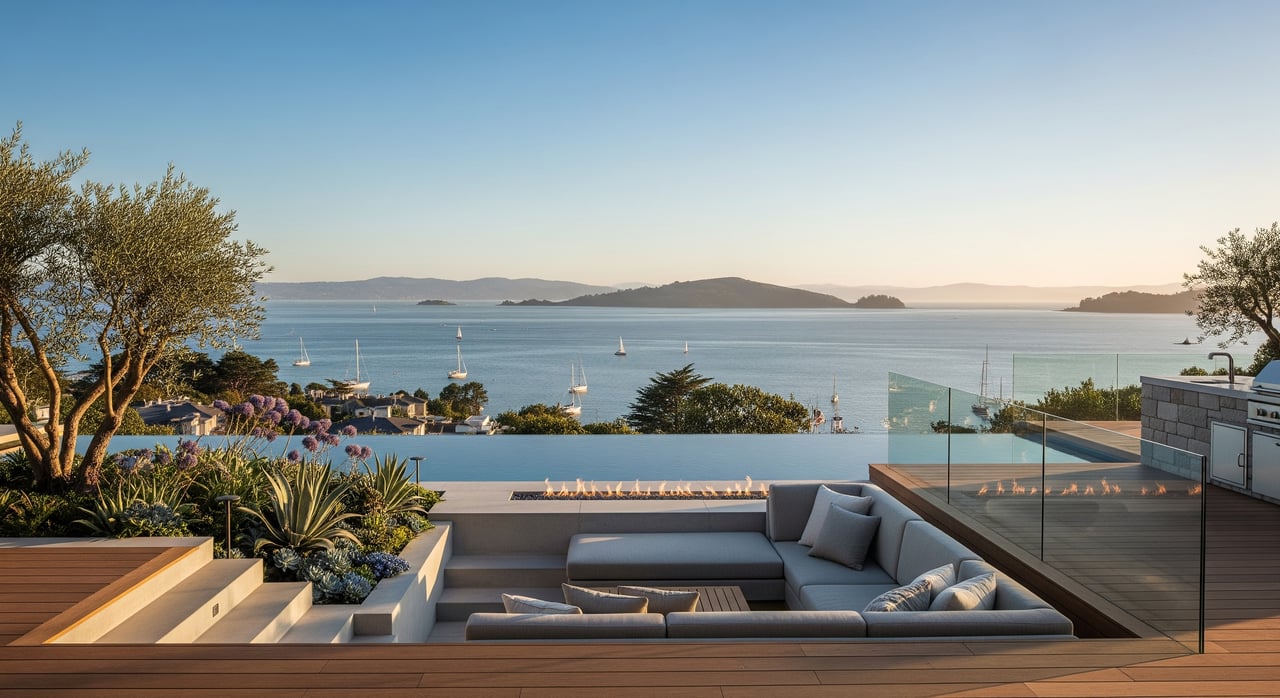
If you live in Tiburon or San Rafael, the view is your home’s signature feature. When you step outside, you want the bay to take center stage without bulky rails, overgrown plants, or corroded fixtures stealing attention. With a few smart upgrades tailored to coastal conditions, you can protect that panorama, boost livability, and make your home stand out when it is time to sell. In this guide, you’ll learn how to choose the right railings, decking, lighting, and plantings that keep sightlines clear while meeting local rules and wildfire guidance. Let’s dive in.
Why view-forward upgrades matter
Water and ridgeline views are a major draw in Tiburon, San Rafael, and across Marin. Outdoor spaces that present unobstructed sightlines, comfortable seating, and warm evening ambiance often increase buyer appeal and can shorten days on market. Your goals are simple:
- Maximize panoramic sightlines with low-profile or glass rail systems.
- Minimize visual clutter by orienting seating to the contour of the bay.
- Choose materials that resist salt, wind, and sun.
- Design for wildfire defensibility and code compliance so projects are marketable and insurable.
A few quick wins to consider:
- Replace bulky pickets with glass or slender metal rails.
- Rework plantings into tiers that frame rather than block the view.
- Add shielded, low-glare lighting for subtle evening use.
- Document permits and warranties for future resale.
Know the rules before you build
In coastal Marin, most permanent deck additions, structural changes, and guardrail replacements require permits. Start early with the right contacts so your project moves smoothly and passes final inspection.
- Check with the Town of Tiburon Planning and Building Department or the City of San Rafael Community Development for permit scope, plan check, and any local design review.
- Confirm whether your property falls under Marin County jurisdiction if you are outside town or city limits.
- If you are close to the shoreline, verify whether the Bay Conservation and Development Commission has jurisdiction over your work.
- Coordinate with the local fire authority for defensible space and ember-resistant requirements.
- Follow California building codes and local amendments for structural design, rail height, safety glazing, and wind loads. Exact guardrail requirements can vary by jurisdiction and project type, so confirm details with building officials.
Plan for several weeks to a few months for approvals, especially for elevated decks, long cantilevers, or frameless glass systems that need structural engineering. Historic districts, HOAs, or design review boards may add standards for materials, colors, or screening.
Durable decking for coastal living
Salt air, moisture, and sun call for low-maintenance materials and corrosion-resistant hardware. Your deck should look clean, feel comfortable underfoot, and hold up to wind and spray.
- Composite decking: Low maintenance and moisture resistant, which suits coastal homes. Be aware it can heat up in full sun and may fade over time.
- Exotic hardwoods like ipe: Dense and durable with a high-end look. Expect higher cost and periodic oiling. Untreated boards can be slippery when wet.
- Pressure-treated lumber: Lower upfront cost but needs more maintenance and can underperform in continuous salt exposure.
- Aluminum decking: Very durable and low maintenance, with a more contemporary look and a higher price point.
Whatever surface you choose, the substructure and fasteners are critical near the bay:
- Use marine-grade 316 stainless steel fasteners, connectors, and fittings. Galvanized hardware corrodes faster in salt air.
- Consider concealed fastening systems for composites to reduce exposed heads, but still specify corrosion-resistant clips and screws.
- Protect the house connection. Proper flashing and ledger attachments per code help prevent water intrusion, a common source of deck failure.
Railings and glass that keep the view
Railings define your sightline. Glass and slender metal solutions create a near-invisible edge, but design and hardware must be chosen for coastal conditions and wind performance.
- Glass rails: Framed or frameless glass provides the clearest views. Laminated tempered glass is preferred for safety because it holds together if fractured. Channel-mounted glass can be designed with or without a top rail depending on code and engineering.
- Metal rails: Aluminum with a high-quality powder coat or marine-grade stainless cable and mesh systems keep profiles light. Specify premium coatings and gasketed connections to resist salt.
- Hardware: Choose 316 stainless or black anodized aluminum rated for marine exposure. Design with drainage so salt and water do not get trapped.
- Engineering: Frameless systems and taller exposures require heavier glass and robust supports to meet local wind loads. Engage a licensed engineer and a coastal-experienced installer.
Glass clarity and heat control deserve a quick note. Clear glass maximizes views but can reflect sunlight. Low-E coatings can improve energy performance but may subtly change the visual. Discuss options with your installer to balance clarity, comfort, and code.
Maintenance is simple but essential: rinse glass to remove salt deposits and use only mild cleaners recommended by the manufacturer.
Landscape that frames the bay
Thoughtful landscape design keeps the horizon open while softening edges and adding privacy where needed. The right strategy uses height and layering to guide the eye.
- Layered planting: Keep low, wind-tolerant species in the foreground near decks, place mid-height shrubs strategically, and reserve taller elements off axis to frame rather than block the view.
- Terraces and horizontal planes: Stepped beds or small retaining edges hold plantings below your sightline and stabilize slopes.
- Focal framing: Use a sculptural boulder, a short hedge, or a single specimen to direct attention toward the water.
For Tiburon and Marin microclimates, prioritize salt and wind tolerance, drought resilience, and low canopy height near viewing corridors. Commonly recommended options include manzanita, California lilac, coastal sages and select succulents, and coyote brush as a mid-height screen where appropriate. Avoid invasive species such as French broom or ice plant where prohibited. Always confirm plant choices with a local nursery or landscape professional for your exact site and soil.
Privacy without losing the view
You can maintain privacy without walling off the bay.
- Use slender vertical screens, lattice with vines, or narrow columnar trees placed outside the primary view corridor.
- Consider removable elements like planter boxes or movable screens for seasonal flexibility.
Lighting for ambiance and night sky
Evening lighting should make outdoor time comfortable without glare or light spill that distracts from the skyline.
- Choose marine-grade fixtures rated for wet locations with corrosion-resistant hardware.
- Opt for warm LED light, around 2700 to 3000K, with shielded fixtures and downlighting on steps and paths.
- Favor low intensity and directional beams to respect dark-sky principles and local expectations.
- Run exterior wiring in conduit rated for coastal environments and consider integrated step lights or recessed fixtures to keep the focus on the view.
Wildfire defensibility on the coast
Marin’s fire season requires planning for ember resistance and defensible space without sacrificing design.
- Follow local fire authority guidance, often up to 100 feet of defensible space with special attention to zones closest to the structure. Confirm exact requirements for your address.
- Use noncombustible materials near the home, such as stone, concrete, or metal decking, and choose ember-resistant furnishings.
- Select low-fuel plantings near structures and remove ladder fuels that carry fire upward.
- Keep roofs and gutters clear of debris to reduce ignition risk.
Plan your project step by step
A clear sequence speeds approvals and keeps construction tidy.
- Define objectives. Decide if your priority is rail replacement, a full deck expansion, terraced landscaping, or lighting. Set a budget and buyer profile if you plan to sell.
- Complete a site survey. Confirm property lines, easements, utilities, topography, and test viewpoints at different times of day and seasons.
- Consult authorities. Speak with the local building department and fire authority to confirm permits and code requirements.
- Engage the right pros. Hire a landscape designer familiar with Marin natives, a structural engineer for elevated or glass work, and installers with proven coastal experience.
- Get multiple bids. Verify references for similar coastal projects and confirm hardware specifications and coatings in writing.
- Submit permits and plan staging. Allow for review time and coordinate work to minimize disruption to neighbors and access routes.
- Close out with a maintenance plan. After final inspections, keep a written schedule for cleaning, inspections, and plant care.
Budget and timeline basics
Costs vary by scope, complexity, and finishes, but a few patterns help you plan:
- Glass railings and engineered systems fall in the moderate to high range.
- Composite decking is moderate to high with lower lifetime maintenance.
- Exotic hardwoods carry a higher upfront cost and ongoing care.
- Terraced landscape work and professional lighting add to overall cost but can deliver strong visual impact.
Timelines also depend on permitting and site conditions. A smaller railing replacement can span a few weeks including permits. Deck additions, structural changes, or terracing with retaining elements often take several weeks to a few months.
Marketability and ROI in Marin
Well-executed outdoor spaces that highlight views, reduce maintenance, and meet defensible space standards tend to attract more interest. While returns vary by market conditions and execution, projects that do the following typically help resale:
- Improve view clarity with glass or low-profile rails.
- Reduce perceived maintenance with corrosion-resistant hardware and composite decking.
- Increase usability with seating zones, shade strategies, and integrated lighting.
If you are selling soon, prioritize the items that show immediately in photos and in person. If you plan to stay, still document permits and warranties, since buyers often discount properties with unpermitted decks or non-compliant rails.
Maintenance checklist
Keeping the view crisp and the structure sound is about routine care.
- Monthly or seasonal: Rinse glass and metal railings to remove salt; clear debris from the deck surface and understructure; visually check connectors and fasteners.
- Annual: Inspect the ledger and structural connections, especially where the deck meets the house. Touch up finishes or powder coat as needed. Prune plantings to maintain view corridors and defensible space.
- Documentation: Keep a folder of permits, plans, product data, and warranties to share with future buyers.
Ready to showcase your view?
If you want a second set of eyes on which upgrades will move the needle for buyers in Tiburon, San Rafael, or greater Marin, reach out. With a design-forward approach and local expertise, Daniel M. Nebenzahl can help you prioritize view clarity, durability, and compliance so your outdoor spaces shine in photos and in person. Request Your Home Valuation and let’s position your property for a confident sale.
FAQs
Do Tiburon glass railings stain from salt air?
- Yes, glass can show salt deposits. Rinse regularly, use manufacturer-recommended cleaners, and specify laminated glass with corrosion-resistant hardware to make upkeep easier.
Do I need a permit to replace a deck railing in Tiburon or San Rafael?
- Very likely. Most guardrail replacements and any structural changes require permits. Confirm details with the local building department before you start.
Are frameless glass railings safe in coastal wind near the bay?
- Frameless systems must be engineered for local wind loads and anchored with appropriate hardware. Work with a licensed engineer and an installer experienced with coastal projects.
How do I keep plants from blocking a Tiburon or San Rafael view over time?
- Choose low-growing, wind-tolerant species in primary view corridors, use terraced beds, and maintain a seasonal pruning schedule to protect sightlines.
What wildfire steps apply to Marin decks with bay views?
- Follow local fire authority guidance for defensible space, use noncombustible materials near the home, manage vegetation to reduce fuel, and keep roofs and gutters clear of debris.