A Tiburon view home can be stunning at first glance, but the real question is what that view will feel like after the excitement wears off. If you are buying in this part of Marin, you are not just choosing a beautiful outlook. You are also choosing a hillside, a microclimate, a set of town rules, and a long-term ownership experience. This guide will help you look past the postcard moment and focus on what matters most before you buy. Let’s dive in.
Why Tiburon View Homes Need Extra Diligence
Tiburon does not treat view properties like ordinary suburban homes. The town states that permits and reviews here reflect the peninsula’s geologic, topographic, and climate conditions, along with concerns about view protection, privacy, and aesthetics. That matters because the features that make a home special can also make future changes more regulated.
Tiburon’s current general plan, adopted on May 22, 2023, is centered on preserving the town’s key characteristics while addressing land use, housing, open space, transportation, and environmental hazards. For you as a buyer, that means a home’s setting is a major part of its value, but also part of its complexity.
Understand the View Beyond the Photo
A wide bay view may be the reason you book the showing, but the day-to-day experience of that view can vary more than many buyers expect. Marin County describes the area as a mix of steep coastal, hill, and valley terrain, with more summer fog in southern Marin and warmer conditions in interior valleys. In Tiburon, slope, orientation, and exposure can make two view homes feel completely different.
That is why it is smart to visit a property at more than one time of day. Morning light, late afternoon glare, wind exposure, and the amount of visible sky from main living areas can all shape how enjoyable the home feels. A dramatic water view is one thing, but a comfortable, livable view is what you will actually experience every day.
Check Sun, Fog, and Wind
A home that feels bright and calm at noon may feel cool, shaded, or windy later in the day. Southern Marin’s microclimate patterns can affect how much fog rolls in and how long it lingers. Even within Tiburon, those differences can show up from one street to the next.
If possible, pay attention to how the home feels from key rooms and outdoor spaces. A great view from a deck is valuable, but it may matter just as much whether your kitchen, primary bedroom, or main living room gets the light you want.
Think About Seasonal Living
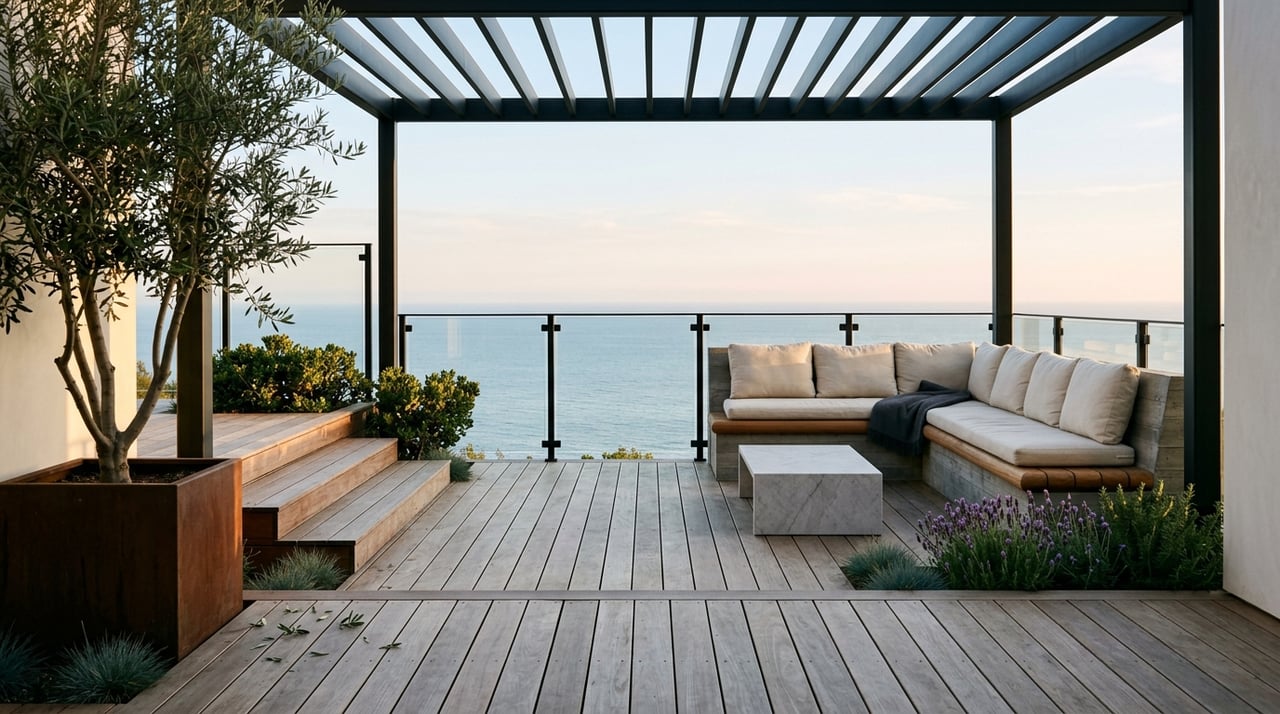
A view home should work in more than one season. Winter light angles, summer fog, and shoulder-season wind can all change your experience of indoor and outdoor spaces. If you are planning to use terraces, decks, or patios often, this is especially important.
Privacy Can Change Over Time
One of the biggest mistakes buyers make is treating privacy as a fixed feature. In Tiburon, privacy is not only about what exists today. It is also about what could be built, removed, or altered nearby later.
The town requires site plan and architectural review for exterior alterations that need a building permit. It specifically calls out features such as retaining walls over 42 inches, deck portions more than 36 inches above grade, and tree removal or alteration. Because Tiburon’s permit process reflects view protection and privacy concerns, neighboring changes can affect how your property feels over time.
Ask What Surrounding Lots Could Do
Before you assume a view corridor or privacy buffer is permanent, look more closely at adjacent parcels. A nearby deck expansion, tree change, retaining wall, or other exterior improvement could alter sightlines or screening. Even if the town has a view-sensitive review culture, future change is still part of the ownership equation.
This is where local knowledge matters. Understanding how nearby lots sit, how homes are positioned, and what kinds of exterior projects are common can give you a more realistic picture of long-term enjoyment.
Outdoor Spaces Often Come With Rules
In Tiburon, outdoor living adds value, but it can also add layers of review and cost. The town requires design review for new homes, major additions over 500 square feet, accessory structures, and certain fences, walls, and tree alterations. Building permits are also generally required for many exterior projects, including reroofing, drainage, electrical, plumbing, and mechanical work.
That means projects that may seem straightforward elsewhere can become more involved here. A larger deck, a rebuilt terrace, slope work, or a new retaining wall may require much more than a contractor estimate.
Look Past Finish Materials
Buyers often focus on surface-level upgrades such as stone, tile, railings, or outdoor kitchens. On a Tiburon hillside property, the bigger costs may be underneath those finishes. Drainage, engineering, retaining walls, and slope stabilization can drive both budget and timeline.
If you are buying with plans to improve the view experience, it helps to think early about what the site may require. A design-forward idea is only as workable as the lot conditions and town requirements behind it.
Hillside Conditions Affect Cost and Risk
A beautiful hillside setting can come with real long-term ownership considerations. Marin County identifies major wildland fire risks in hilly areas west of Highway 101, where steep slopes, poorer fire access, limited water pressure, and flammable vegetation can all contribute to risk. Tiburon Fire Protection District states that the 2025 CAL FIRE LRA map identifies Tiburon Fire District zones as Moderate Fire Hazard Zones, while Angel Island State Park is classified as Very High.
Marin County’s hazard map resources also track wildfire, landslide, flood, sea level rise, and tsunami exposure. For buyers, that means it is important to think about both elevation and location. A higher lot may reduce certain shoreline-related concerns, while a lower or steeper parcel may carry a different mix of issues.
Slope Work Can Trigger More Review
If you plan to improve a hillside site, Tiburon states that a soils report is generally required for hillside construction on slopes of 10 percent or greater. The town also says grading or earth movement over 50 cubic yards triggers design review and a grading permit.
This is important for buyers who see easy upside in reworking terraces, creating flatter outdoor areas, or opening up a better view line. On many Tiburon properties, the real cost of improvement may be tied to land movement, drainage, and engineering rather than the visible finish work.
Access and Convenience Matter More Than You Think
Many Tiburon buyers gladly trade some convenience for privacy, elevation, and sweeping views. Still, it helps to be honest about how you live. A home that feels private and peaceful on a hill may not be the best fit if you want simple daily transit access or easy walkability.
The town states that Tiburon can be reached by car, Golden Gate Ferry, Angel Island Ferry, bus, and bicycle, and Marin Transit route 219 connects Tiburon hills to the ferry dock. In practical terms, hill homes may offer a different lifestyle rhythm than lower-elevation locations closer to the waterfront or downtown areas.
Match the Home to Your Routine
If you commute, travel often, or expect to use public transit regularly, test the route from the home. If you prioritize quiet mornings, privacy, and outdoor space, a higher setting may be worth the trade-off. The right choice depends less on the map and more on your actual weekly routine.
Price Gaps in Tiburon Are Wide
Tiburon sits at the high end of nearby Marin hill and bay markets. In May 2026, Tiburon’s median sale price was about $3.10 million, compared with about $2.55 million in Mill Valley, $1.86 million in Sausalito, and $1.28 million in San Rafael. That alone tells you Tiburon pricing has its own logic.
Within and around Tiburon, micro-location matters even more. Nearby averages were reported at about $4.1915 million for Paradise Drive, $4.995 million for The Hill, and $13.19 million for Belvedere Island. In San Rafael, areas such as Peacock Gap averaged about $2.3 million, Dominican-Black Canyon about $1.799 million, and Kent Woodlands about $5.745 million.
A Better View Can Mean a Much Bigger Price
Current Tiburon inventory also shows a wide list-price range, from under $1 million to nearly $20 million. That spread reinforces a key point for buyers: in Tiburon, the difference between a good view and a truly exceptional one can show up directly in the asking price.
When you compare homes, try not to rely on citywide numbers alone. Water orientation, privacy, lot shape, elevation, and how the view is experienced from the home can all affect value in a big way.
Questions To Ask Before You Buy
If you are seriously considering a Tiburon view home, keep these questions front and center:
- How does the home feel in the morning, late afternoon, and early evening?
- What are the fog, wind, and sun patterns from the main rooms and outdoor spaces?
- What could neighboring properties change over time through tree work, decks, walls, or additions?
- If you want to improve the site later, what kinds of review or permits might be required?
- Is the lot steep enough that future work may involve soils reports, grading review, or engineering?
- How does the home’s location fit your routine for driving, ferry access, or day-to-day convenience?
- Are you paying for a broad city label, or for a truly superior micro-location?
Buy With a Long-Term Lens
A Tiburon view home can be a remarkable purchase, but the smartest buyers look at more than the horizon line. They study how the home lives, how the lot functions, what the town may require, and how the surrounding setting could change. That is often the difference between buying a beautiful image and buying a property that truly works for you.
If you want a local, design-minded perspective on Tiburon, Marin hillsides, and the details that shape long-term value, connect with Daniel M. Nebenzahl. He can help you evaluate not just the home you see today, but the ownership experience that comes with it.
FAQs
What should you check before buying a Tiburon view home?
- Visit the property at different times of day, study sun, fog, wind, privacy, lot slope, access, and what future exterior changes might be possible on nearby parcels.
Why do permits matter when buying a Tiburon hillside home?
- Tiburon requires review for many exterior and site-related projects, so future changes such as decks, retaining walls, drainage work, grading, and tree alterations may be more regulated than buyers expect.
How do Marin microclimates affect a Tiburon view property?
- Marin’s terrain and weather patterns can change how much fog, sun, heat, and wind a home gets, which can affect comfort, natural light, and how usable outdoor spaces feel.
Are Tiburon view homes priced differently from nearby Marin homes?
- Yes. Tiburon’s median sale price was about $3.10 million in May 2026, and micro-locations within and around Tiburon can vary widely based on view quality, privacy, and lot character.
What lot issues can affect future improvements on a Tiburon property?
- Steep slopes, drainage needs, retaining walls, grading thresholds, and soils report requirements can all affect the cost and feasibility of improving a hillside site.